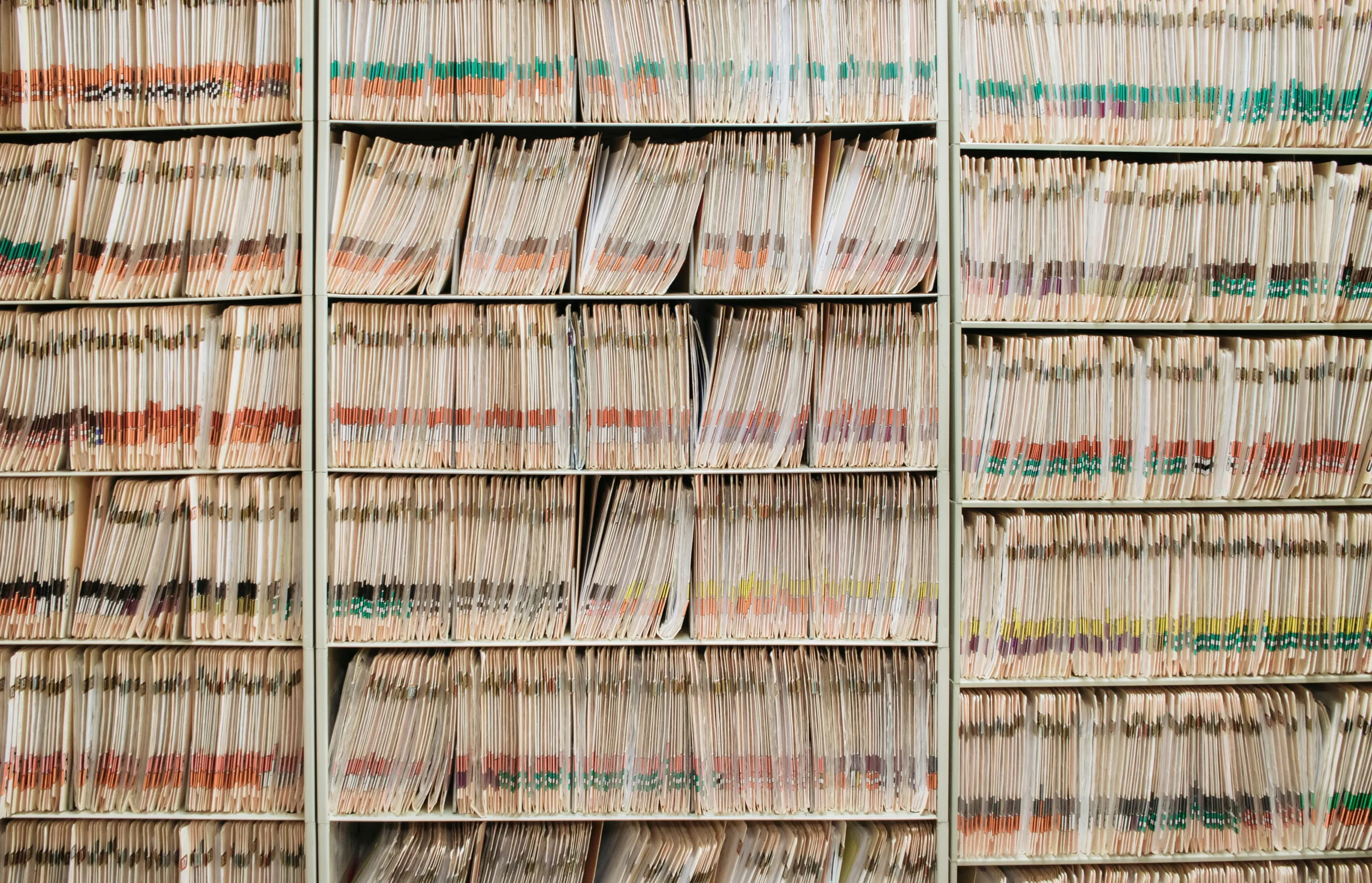

It’s 15:47 on a Friday. An auditor, a lawyer, or your MD needs one specific clause from one specific supplier contract — signed sometime around 2019, scanned by someone who no longer works there, and saved as scan_final_v2 (1).pdf in a folder structure that made sense to exactly one person.
You open it. You hit Ctrl+F. You type the keyword.
Zero results.
Not because the clause isn’t there. It is. You can see it. But your computer can’t — because that PDF isn’t a document. It’s a photograph of a document. And you can’t search a photograph.
Welcome to the Digital Black Hole: the place where scanned contracts, invoices, safety certificates, HR records, and compliance documents go to become technically-stored-but-practically-lost.
The Human Search Engine: When Your Document Management System Is a Person
Every business has one — the person who “knows where everything is.” Twenty years of institutional knowledge about which folder, which archive box, which naming convention.
It works beautifully, right up until they resign, retire, or take two weeks of leave during audit season. If your document retrieval strategy is a person, you don’t have a strategy. You have a single point of failure with a pension plan.
The Audit Scramble: Why Unsearchable Scanned Documents Fail Compliance
The request sounds simple: “Please provide all supplier agreements containing X clause, signed between 2018 and 2022.” If your contracts were searchable, that’s a ten-minute job.
If they’re scanned PDFs spread across shared drives and SharePoint folders from three different eras of the company, it’s two people, four days, and a lot of squinting. Multiply that by every audit, every year.
The Inherited Archive: Post-M&A Document Digitization Debt
If your business has grown through acquisition, you know this one intimately. Every company you’ve absorbed came with its own filing logic, its own naming conventions, and — inevitably — its own mountain of scanned paper masquerading as digital records. You didn’t just acquire their operations.
You acquired their black hole. Several of them, actually.
The Dispute You Can’t Defend: When Searchable Documents Decide the Case
A supplier claims you agreed to certain terms. You’re fairly sure you didn’t. The proof exists — somewhere in a few thousand unsearchable pages. Every hour it takes to find that document is an hour of legal exposure, and “we’re fairly sure” has never won a dispute.
The Retype Tax: The Hidden Cost of Skipping OCR Document Digitization
Your team pulls figures off scanned invoices and delivery notes and types them — by hand — into your ERP or finance system.
Every keystroke is paid time spent duplicating information you already own, with a fresh opportunity for human error baked into each one. At high volumes, this isn’t admin. It’s a silent line item on your payroll.
The Real Cost Isn’t the Searching. It’s Everything Downstream.
The lost hours are the visible part. The expensive part is what those hours block:
Decisions stall while someone hunts for the supporting document.
Compliance becomes theatre — you’re adhering to regulations, you just can’t prove it quickly.
Your data can’t work for you. Trends across thousands of invoices, recurring issues across maintenance reports, exposure across contract portfolios — it’s all sitting in your archive, invisible, because analysis requires text and all you have are pictures of text.
Your archive is either an asset or a liability. There’s no neutral setting.
Paperless Performance: Enterprise Document Digitization That Answers Back
The fix is well-established: intelligent document processing (OCR, sharpened with AI) that converts your image-based archive into live, machine-readable, instantly searchable text. Modern engines handle poor scan quality, mixed layouts, even handwriting — at accuracy levels that make manual retyping look like an expensive hobby.
But here’s the part that matters at enterprise scale: the technology is the easy bit. The real work is doing it across decades of archives, multiple entities, and millions of pages — without disrupting daily operations, and structured so the output actually plugs into the systems your teams use.
From Scanned PDFs to a Searchable Knowledge Base
That’s exactly what our Paperless Performance service does. We take your static archive — the scanned contracts, the inherited acquisitions folders, the invoice mountains — and turn it into a searchable, structured knowledge base. Ctrl+F finally does what it was always supposed to do.
What Enterprise Document Management Looks Like After the Black Hole
The next audit request, legal query, or Friday-afternoon fire drill is already on its way. The only question is whether it takes your team thirty seconds or three days.
Ready to close the black hole? [Talk to us about Paperless Performance.]